How Real Estate Agents Can Explain Zillow Home Value Estimates (Without Losing a Client’s Trust)
Reading time: 8 minutes
Table of Contents
- The Zestimate Problem Every Agent Faces
- How Zillow’s Estimate Actually Works
- Why the Number Is Often Off—And By How Much
- Scripts and Strategies to Explain It to Clients
- Real Scenarios From the Field
- Zillow Estimate vs. Real Appraisal vs. CMA
- FAQs
- Your Next Steps
The Zestimate Problem Every Agent Faces
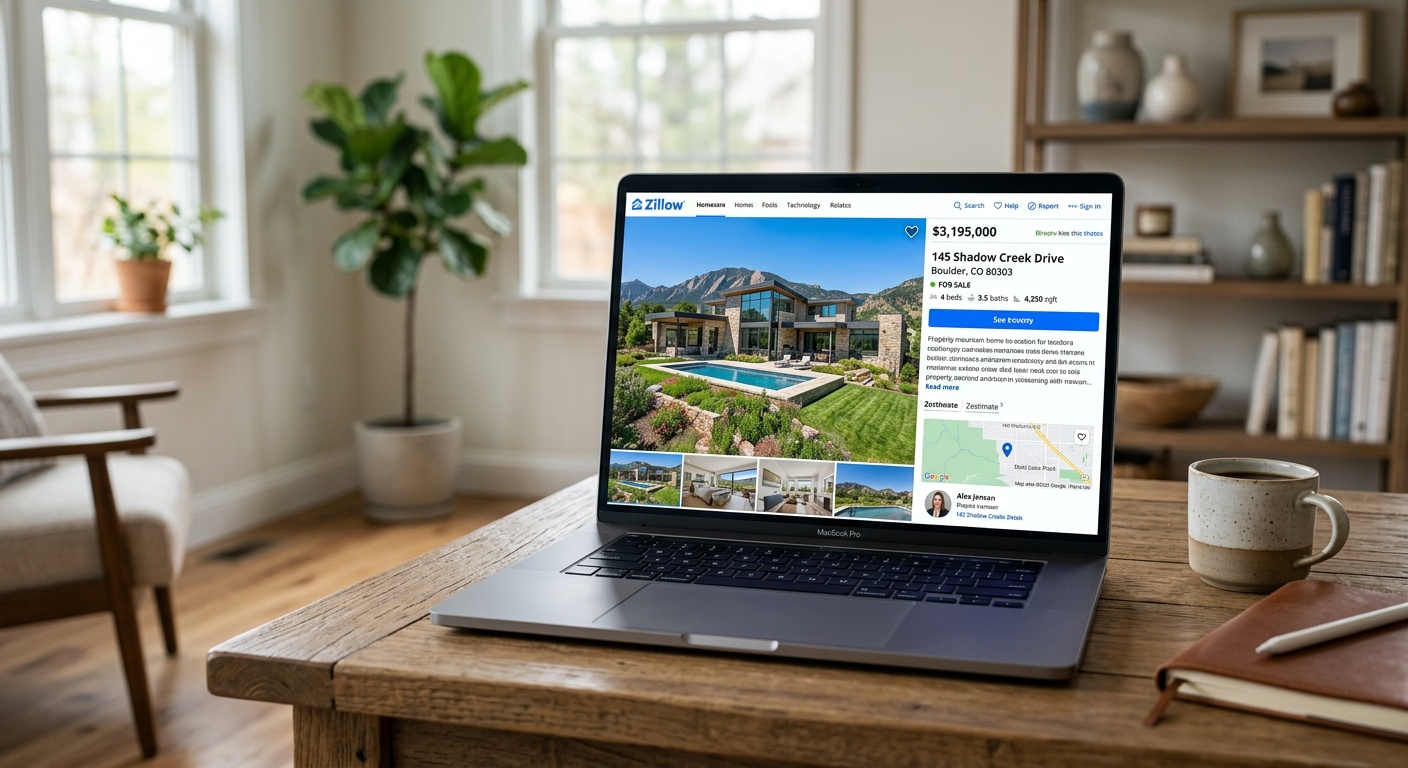
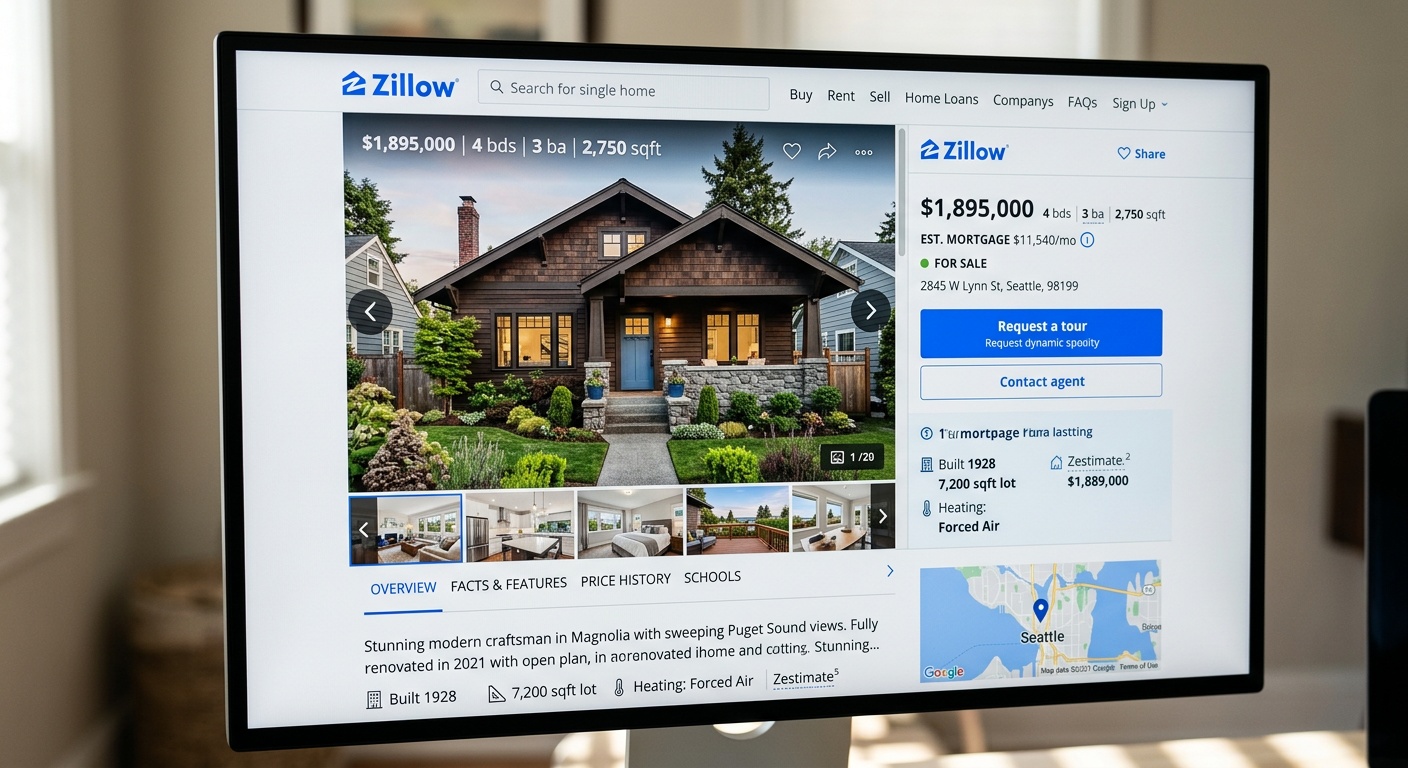
Picture this: a seller in Denver pulls up Zillow on their phone during your listing appointment and says, “But it says my house is worth $612,000. Why are you telling me $560,000?” You’ve had this conversation before—probably last week. In 2026, with home values still adjusting after years of rate volatility, this scenario plays out in living rooms across the country almost daily.
Here’s the straight talk: You’re not fighting Zillow, you’re fighting a perception problem. Sellers and buyers see a clean, confident number on a trusted app and assume it carries the same weight as a licensed appraisal. Your job isn’t to trash the tool—it’s to reposition it as one data point among many, and to do it in a way that builds your credibility rather than eroding it.
According to Zillow’s own published data, the nationwide median error rate for on-market homes hovers around 2.4%, but that figure balloons significantly for off-market properties, rural listings, and homes with unique features. That gap between “median error” and “your specific home” is exactly where agents earn their fee.
How Zillow’s Estimate Actually Works
To explain the Zestimate credibly, you need to understand its mechanics—not just dismiss it as “wrong.” Zillow uses a proprietary machine learning model that pulls from:
- Public tax assessor records (square footage, lot size, bedroom/bathroom counts)
- MLS data where available through partnerships
- Recent comparable sales in the surrounding area
- User-submitted updates like renovation details or facts homeowners edit themselves
- Market trend algorithms that adjust based on regional appreciation or depreciation patterns
The model recalculates constantly, which is exactly why the number can swing week to week even when nothing about the physical home has changed. It’s a statistical model, not a walkthrough. It has never seen the cracked foundation, the newly renovated kitchen, or the fact that the house backs up to a busy road.
What the Algorithm Cannot See
This is the heart of your explanation to clients. Automated valuation models (AVMs) like the Zestimate are blind to:
- Interior condition and finish quality (granite vs. laminate, updated vs. original 1985 bathroom)
- Curb appeal and landscaping
- Noise, view, and lot positioning nuances
- Pending neighborhood changes (new school zoning, upcoming commercial development)
- Off-market comps and pocket listings your brokerage may have access to
Why Accuracy Varies by Market Type
Zillow itself acknowledges that Zestimates are more reliable in dense, homogenous suburban markets with lots of recent sales data—think tract housing in Phoenix or Charlotte. They’re notably less reliable in rural areas, luxury markets, and neighborhoods with architecturally unique homes, condos with irregular HOA fee structures, or areas with low sales volume. If you work in a niche or high-end market, this is your strongest talking point.
Why the Number Is Often Off—And By How Much
Let’s get specific instead of vague. Zillow’s published median error rate for off-market homes has historically run near 7.5%, though this fluctuates by region. On a $500,000 home, a 7.5% margin represents a swing of $37,500—more than enough to blow up a pricing strategy or spook a first-time buyer into overpaying (or underbidding).
“An automated valuation is a starting conversation, not an ending one. The moment a client treats it as gospel, they’ve outsourced their biggest financial decision to a formula that’s never stepped foot in their home.” — a common refrain among top-producing agents when training new licensees in 2026
Real-world drift also happens because of data lag. Tax records update slowly. If a homeowner finished a $90,000 basement renovation eight months ago, it may not be reflected yet. Conversely, if comparable sales in the area were foreclosures or distressed sales, the algorithm can drag the whole neighborhood’s estimate downward temporarily.
Scripts and Strategies to Explain It to Clients
You don’t need a lecture on algorithms—you need a 90-second explanation that respects the client’s intelligence while redirecting them toward your expertise. Here’s a practical framework:
The “Weather Forecast” Analogy
Tell clients: “Think of the Zestimate like a seven-day weather forecast. It’s a solid general prediction based on patterns, but it can’t tell you if it’ll rain on your specific street at 3pm on Thursday. That’s what I do—I give you the hyper-local, on-the-ground forecast based on what’s actually happening with comparable homes and buyer behavior right now.”
The Three-Question Redirect
When a client pushes back with a Zillow number, ask:
- “When was the last time Zillow’s system saw the inside of your home?”
- “Does it know about the roof you replaced last year?”
- “Would you want a buyer’s lender to base your loan on an algorithm instead of a licensed appraiser?”
This isn’t confrontational—it’s collaborative. You’re inviting them to reach the conclusion themselves rather than telling them they’re wrong.
Real Scenarios From the Field
Case Study 1: The Overpriced Seller. In a 2025 listing in suburban Austin, a seller insisted on pricing at the Zestimate of $478,000. The agent pulled a full CMA showing five comparable closed sales averaging $445,000, plus two active competing listings sitting unsold for 60+ days at similar prices. After 45 days on market with no offers at the higher price, the seller repriced to $449,900 and sold within two weeks. The lesson communicated afterward: “The algorithm doesn’t know buyers are cross-shopping you against three other similar homes right now.”
Case Study 2: The Nervous First-Time Buyer. A buyer in Tampa found a home listed at $389,000 with a Zestimate of $362,000, and assumed the seller was overpricing by $27,000. The agent walked through recent renovations (new HVAC, updated kitchen, impact windows added post-hurricane-season upgrades) not yet reflected in tax records, plus three comparable sales within a quarter-mile that closed between $385,000 and $395,000. The buyer proceeded confidently and secured the home two weeks later.
Case Study 3: The Refinance Confusion. A homeowner in Columbus was told by their lender that an appraisal came in at $310,000, well below their expected $340,000 based on Zillow. The agent explained that appraisals weight recent, verified comparable sales more heavily and apply stricter condition adjustments than an AVM, helping the client understand the discrepancy wasn’t an error—it was two different methodologies.
Zillow Estimate vs. Real Appraisal vs. Agent CMA
| Metric | Zillow Zestimate | Licensed Appraisal | Agent CMA |
|---|---|---|---|
| Typical Median Error Rate | 2.4%–7.5% | Under 2% | 2%–4% |
| Physical Inspection Included | No | Yes | Often (via showings) |
| Cost to Obtain | Free | $400–$700+ | Usually Free |
| Update Frequency | Multiple times weekly | One-time snapshot | Updated per market shift |
| Accepted by Lenders | No | Yes | No (informal use only) |
Visualizing the Accuracy Gap
Here’s a simple breakdown of median error rates by valuation method, useful for showing clients visually why relying solely on one source is risky:
Common Challenges and How to Overcome Them
Challenge 1: The Emotionally Attached Seller. Sellers often anchor to the highest number they’ve seen, whether it’s a Zestimate or a neighbor’s sale price from a hotter market cycle. Overcome this by presenting your CMA before mentioning Zillow at all—let your data set the anchor first.
Challenge 2: The Skeptical Buyer Worried About Overpaying. Buyers fear “losing” against an algorithm’s number. Combat this by showing days-on-market trends and offer-to-list-price ratios in the specific neighborhood, which are far more predictive than a single estimate.
Challenge 3: Explaining Sudden Zestimate Swings. Clients panic when a Zestimate drops $15,000 overnight. Explain that these algorithmic updates often reflect broader recalibrations across an entire zip code, not a judgment on their specific property.
Frequently Asked Questions
Should I tell clients to ignore Zillow completely?
No—that approach tends to backfire and can make you seem defensive or uninformed. Instead, acknowledge it as a useful starting reference point while clearly explaining its limitations compared to a full market analysis or professional appraisal.
Can agents request a correction to a Zestimate?
Homeowners (not agents directly) can claim their home on Zillow and update facts like square footage, upgrades, or renovations, which can improve estimate accuracy over time. Encourage sellers to do this early, ideally before listing.
Do Zestimates affect how buyers negotiate offers?
Yes, often significantly. Buyers frequently reference Zestimates when justifying lowball offers, so agents should proactively prepare comparable sales data to counter this before it becomes a sticking point during negotiations.
Your Roadmap Forward: Turning Zestimate Conversations Into Trust-Building Moments
The agents who thrive in 2026’s data-saturated market aren’t the ones fighting technology—they’re the ones translating it. Here’s your action plan:
- Lead with education, not correction. Explain how AVMs work before you explain why yours differs.
- Always bring a visual CMA to every listing appointment, positioned as the primary document, with Zillow data referenced only as a footnote.
- Encourage clients to claim and update their Zillow profile months before listing to improve baseline accuracy.
- Use analogies—weather forecasts, GPS estimates, or fitness trackers—to make algorithmic limitations relatable and non-technical.
- Document local error-rate data for your specific market so your explanations are backed by numbers, not just opinion.
As AVMs grow more sophisticated with AI-driven imagery analysis and real-time data feeds, the gap between algorithmic estimates and human expertise will narrow—but it won’t disappear. Your value increasingly lies not in having access to data, but in interpreting it with judgment, empathy, and local nuance no algorithm can replicate.
So the next time a client waves their phone at you with a Zestimate, ask yourself: are you prepared to turn that moment into proof of your expertise, or will you let a formula define the conversation?