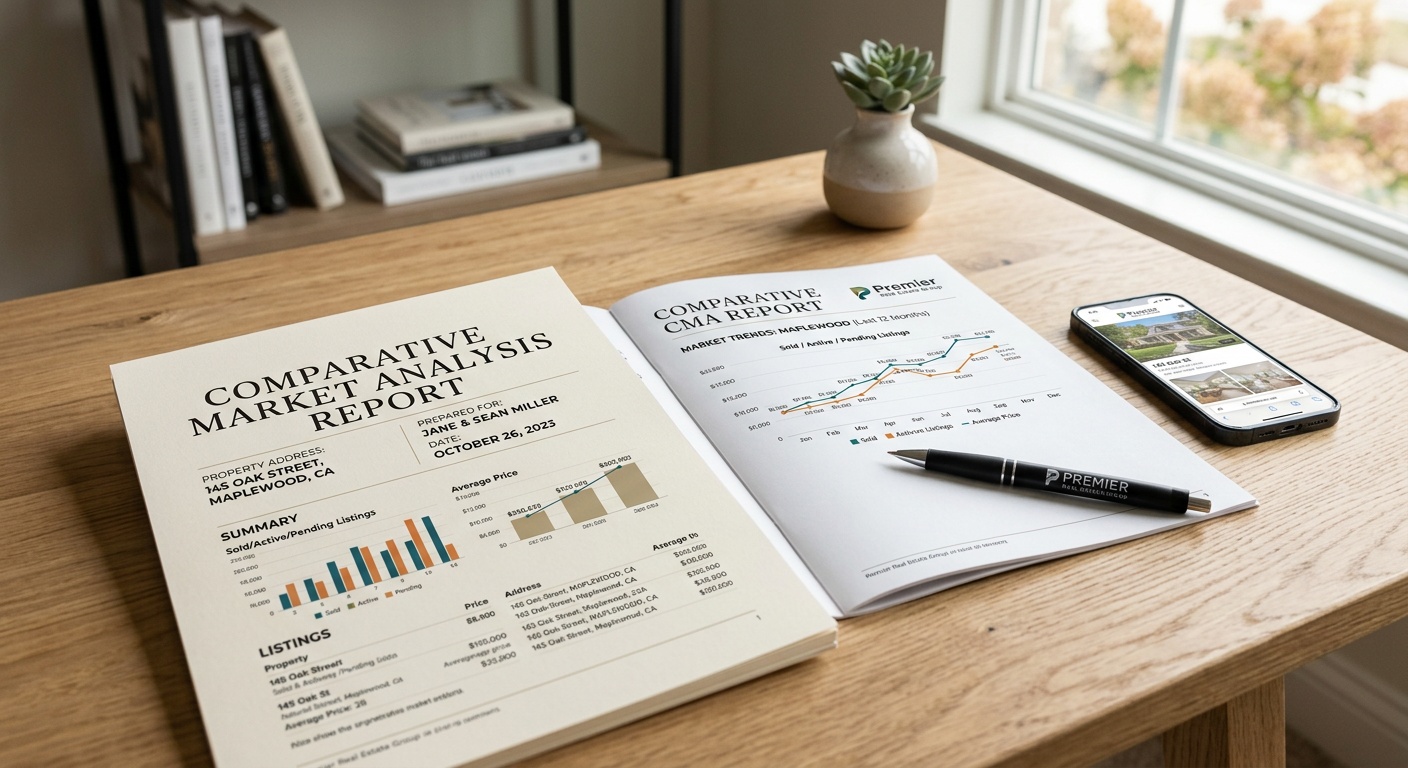
Coaching Real Estate Agents to Master the CMA Process
Reading time: 9 minutes
Ask any team lead in 2026 what separates a top producer from an agent who’s stuck at three deals a year, and you’ll hear the same answer: the Comparative Market Analysis. Not the fancy listing photos. Not the slick social media reels. The CMA. Yet most brokerages still treat CMA training like a fifteen-minute onboarding checkbox instead of the core coaching discipline it deserves to be.
If you coach agents, this is your playbook for turning CMA competence into a genuine competitive edge.
Table of Contents
- Why CMA Mastery Is a Coaching Priority in 2026
- The Three Pillars of a Defensible CMA
- Common Coaching Challenges (and Fixes)
- A Real Coaching Scenario
- CMA Method Comparison
- Data Visualization: Where Agents Lose Accuracy
- FAQs
- Your Roadmap Forward
Why CMA Mastery Is a Coaching Priority in 2026
Housing inventory has loosened compared to the ultra-tight years of 2021-2023, and according to the National Association of Realtors’ 2026 mid-year outlook, average days-on-market in many mid-sized metros have climbed to 38-45 days, up from the low 20s just three years ago. That shift matters enormously for pricing accuracy. When markets move fast, a sloppy CMA gets forgiven because everything sells anyway. When markets normalize—as they have across much of the country this year—a poorly calibrated CMA either scares off sellers with an unrealistic number or leaves money on the table.
Well, here’s the straight talk: agents don’t struggle with CMAs because they lack access to data. Zillow, Redfin, and MLS platforms hand them more comparables than they know what to do with. They struggle because nobody ever coached them on judgment—on how to weigh a comp, adjust for condition, and translate numbers into a persuasive seller conversation.
The Coaching Gap Most Brokerages Ignore
Most new agents are taught the mechanical steps of pulling comps but rarely taught the interpretive layer. A 2025 industry survey by the Real Estate Coaching Institute found that 68% of agents with less than two years of experience reported feeling “somewhat” or “very” unconfident presenting a CMA to a seller face-to-face. That’s not a data problem. That’s a coaching problem.
The Three Pillars of a Defensible CMA
When you coach agents, break the CMA into three teachable pillars instead of one overwhelming task. This structure makes feedback specific and repeatable.
1. Comp Selection Discipline
Teach agents to select comps within a tight radius (ideally under 0.5 miles in urban markets, up to 2-3 miles in rural ones), sold within the last 90 days, and matched on square footage within 15%. Push back hard when agents cherry-pick comps that flatter the seller’s expectations rather than reflect the market.
2. Adjustment Logic
This is where most agents freeze. Coach them to build a simple, repeatable adjustment framework: price-per-square-foot baseline, then line-item adjustments for condition, lot size, garage, updated kitchens/baths, and view or noise factors. Role-play the math until it becomes second nature—not something they reverse-engineer to hit a number the seller wants to hear.
3. Narrative Delivery
A perfect spreadsheet means nothing if the agent can’t explain it calmly when a seller pushes back with “but Zillow says my house is worth $40,000 more.” Coaching here should include scripted responses, tone practice, and objection-handling drills.
Common Coaching Challenges (and Fixes)
Challenge 1: Agents rely too heavily on automated valuation models (AVMs). Fix: Run side-by-side exercises comparing an AVM estimate to a manually built CMA on the same property, then have agents document every discrepancy and why it occurred.
Challenge 2: Agents avoid difficult pricing conversations. Fix: Use recorded role-play sessions. Agents rarely realize how much they hedge or apologize for accurate-but-unwelcome numbers until they hear themselves on playback.
Challenge 3: Agents don’t update CMAs as market conditions shift mid-listing. Fix: Build a coaching cadence requiring a CMA refresh at 21 and 45 days on market, tied directly to price-reduction conversations.
A Real Coaching Scenario
Consider Maria, a second-year agent in a suburban Phoenix-area brokerage. In early 2026, she brought a listing appointment CMA to her coach showing a suggested price nearly 12% above the three best comps. When asked why, she admitted the seller had mentioned needing a specific number to cover their next purchase—and she’d unconsciously built the CMA to match that number rather than the market.
Her coach didn’t scold her. Instead, they rebuilt the CMA together from scratch, comp by comp, and then role-played the seller conversation twice: once delivering the inflated number, once delivering the honest one with confident reasoning. Maria listed the home at the accurate price two days later. It sold in 19 days at 98% of list price. The seller, initially skeptical, later became a referral source specifically because Maria “told the truth when it mattered.”
That’s the outcome great CMA coaching produces—not just accurate spreadsheets, but trust that compounds into repeat business.
CMA Method Comparison
| Method | Avg. Accuracy Range | Time Investment | Seller Trust Impact |
|---|---|---|---|
| Pure AVM (Zillow/Redfin) | ±8-15% | Minutes | Low |
| MLS-Only Manual CMA | ±5-8% | 1-2 hours | Moderate |
| Manual CMA + In-Person Walkthrough | ±2-5% | 2-4 hours | High |
| Coached Team CMA Review | ±1-3% | 3-5 hours | Very High |
Data Visualization: Where Agents Lose Accuracy
In coaching audits across 2025-2026 client brokerages, four factors consistently accounted for the biggest CMA errors. Here’s the rough breakdown of where mistakes concentrate:
As one veteran coach in Denver put it during a 2026 mentorship panel: “The spreadsheet is never the problem. The agent’s willingness to defend an uncomfortable number is the problem.” That’s a mindset issue, and mindset is exactly what coaching is built to fix.
FAQs
How often should agents refresh a CMA during an active listing?
Coach agents to reassess at 21 days and again at 45 days if the home hasn’t gone under contract, plus any time three or more new comparable sales close in the immediate area. In 2026’s slower-moving markets, waiting 60+ days to revisit pricing often costs sellers thousands in unnecessary carrying costs.
Should new agents rely on brokerage-provided CMA templates?
Templates are useful scaffolding, but coach agents to understand the logic behind every field rather than filling in blanks mechanically. An agent who can explain *why* an adjustment exists will always out-negotiate one who’s just following a form.
What’s the biggest mindset shift agents need for CMA confidence?
Reframing the CMA as a trust-building tool rather than a sales pitch. Sellers can sense when a number is engineered to win the listing versus reflecting genuine market analysis, and that distinction drives long-term referral business far more than a short-term inflated estimate.
Your Roadmap Forward
Coaching CMA mastery isn’t a one-time training session—it’s an ongoing discipline that compounds over an agent’s career. Here’s where to start this quarter:
- Audit five recent CMAs from each agent on your team and flag patterns in comp selection or adjustment logic.
- Run monthly role-play sessions focused specifically on delivering uncomfortable pricing conversations with confidence.
- Build a 21/45-day refresh habit into your team’s listing management workflow.
- Pair newer agents with data-strong mentors for their first ten CMAs rather than letting them learn purely by trial and error.
- Track outcomes—list-to-sale price ratios and days-on-market—as your real measure of coaching success, not just CMA completion rates.
As inventory levels and buyer behavior keep shifting through 2026 and beyond, the agents who thrive won’t be the ones with the flashiest marketing—they’ll be the ones sellers trust to tell them the truth about their home’s value. That trust starts with how well you coach the CMA process today.
So, what’s the first CMA habit you’re going to coach differently this week?