Home Value Calculators as a Lead Generation Tool for Agents: The 2026 Playbook
Reading time: 9 minutes
Ever watched a potential seller land on your website, poke around for thirty seconds, and vanish forever? That’s the silent killer of most agent websites in 2026 — no reason to stay, no reason to share contact info. Home value calculators fix that problem by giving visitors something they actually want: a number. Let’s unpack how top-producing agents are turning this simple tool into a predictable pipeline of seller leads.
Table of Contents
- Why Home Value Calculators Still Work in 2026
- How the Lead Capture Mechanics Actually Function
- Choosing the Right Calculator: Build vs. Buy
- Real Agent Examples That Prove the Model
- Common Challenges (and How to Solve Them)
- Calculator Tools Compared
- Conversion Data at a Glance
- FAQs
- Your Next 30 Days: A Practical Roadmap
Why Home Value Calculators Still Work in 2026
Here’s the straight talk: sellers don’t want to talk to an agent first — they want data first. According to the National Association of Realtors’ 2025 Home Buyer and Seller Generational Trends report, 76% of sellers researched their home’s value online before contacting any agent. That number has climbed steadily since Zillow’s Zestimate normalized the “instant value” expectation over a decade ago, and by 2026, consumers simply assume every serious agent offers something similar.
The psychology is simple: a home value calculator lowers the commitment threshold. Instead of asking “Will you call an agent?” you’re asking “Curious what your house is worth?” That’s a much easier yes, and it’s the doorway through which cold traffic becomes a warm, identifiable lead.
The Shift From Passive Curiosity to Active Intent
Not every visitor who checks a home value is ready to sell tomorrow. Some are just nosy neighbors. But intent signals matter more than instant readiness. A person who enters their address, reviews an estimate, and then opts in for a “more accurate, agent-reviewed valuation” has demonstrated a level of engagement that a generic contact form never captures. You’re not chasing strangers — you’re following breadcrumbs they left voluntarily.
Why Generic Landing Pages Fall Short by Comparison
Traditional “Contact Me” pages convert at roughly 1-2% in most brokerage benchmarks. Home value calculator landing pages, when properly optimized, regularly convert between 8% and 15% depending on traffic source and follow-up cadence. The difference isn’t luck — it’s value exchange. You’re giving something tangible before asking for anything in return.
How the Lead Capture Mechanics Actually Function
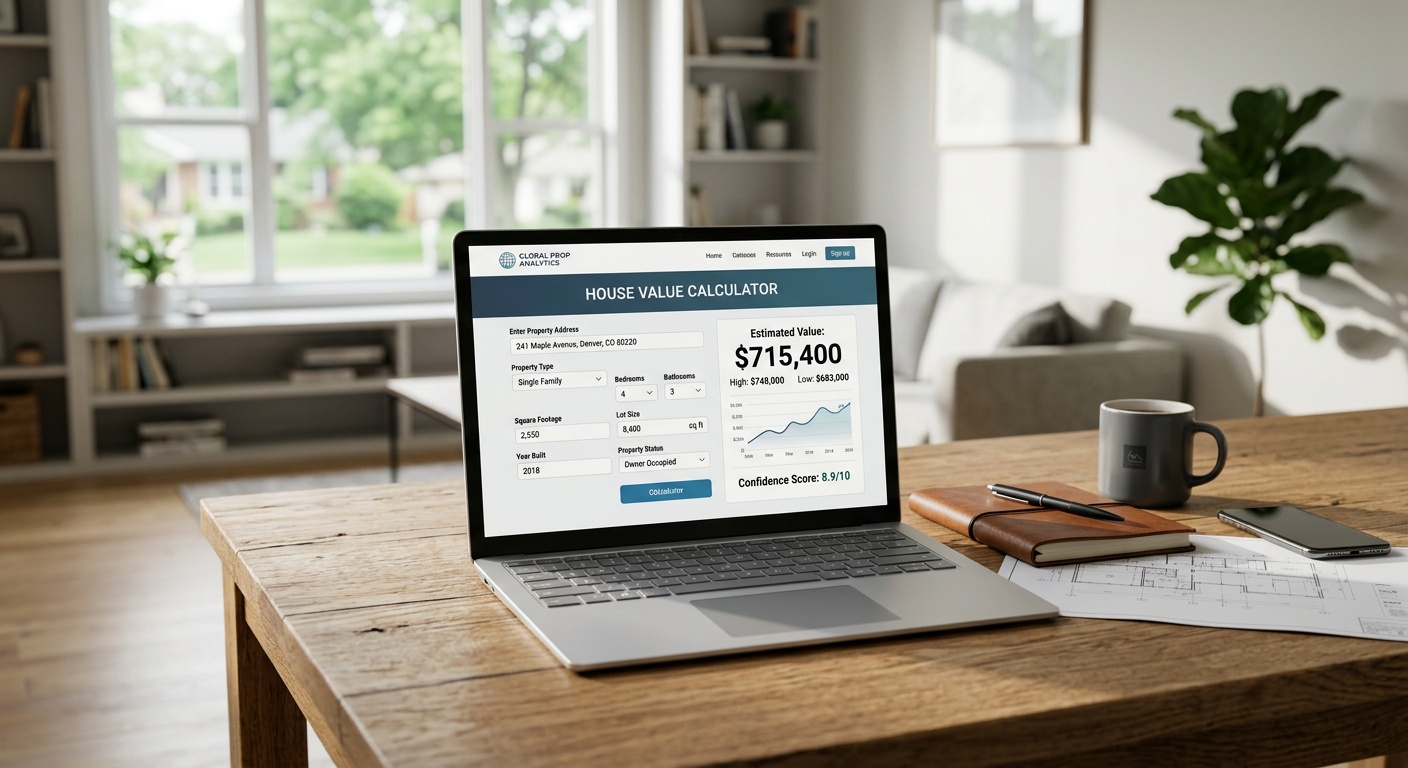
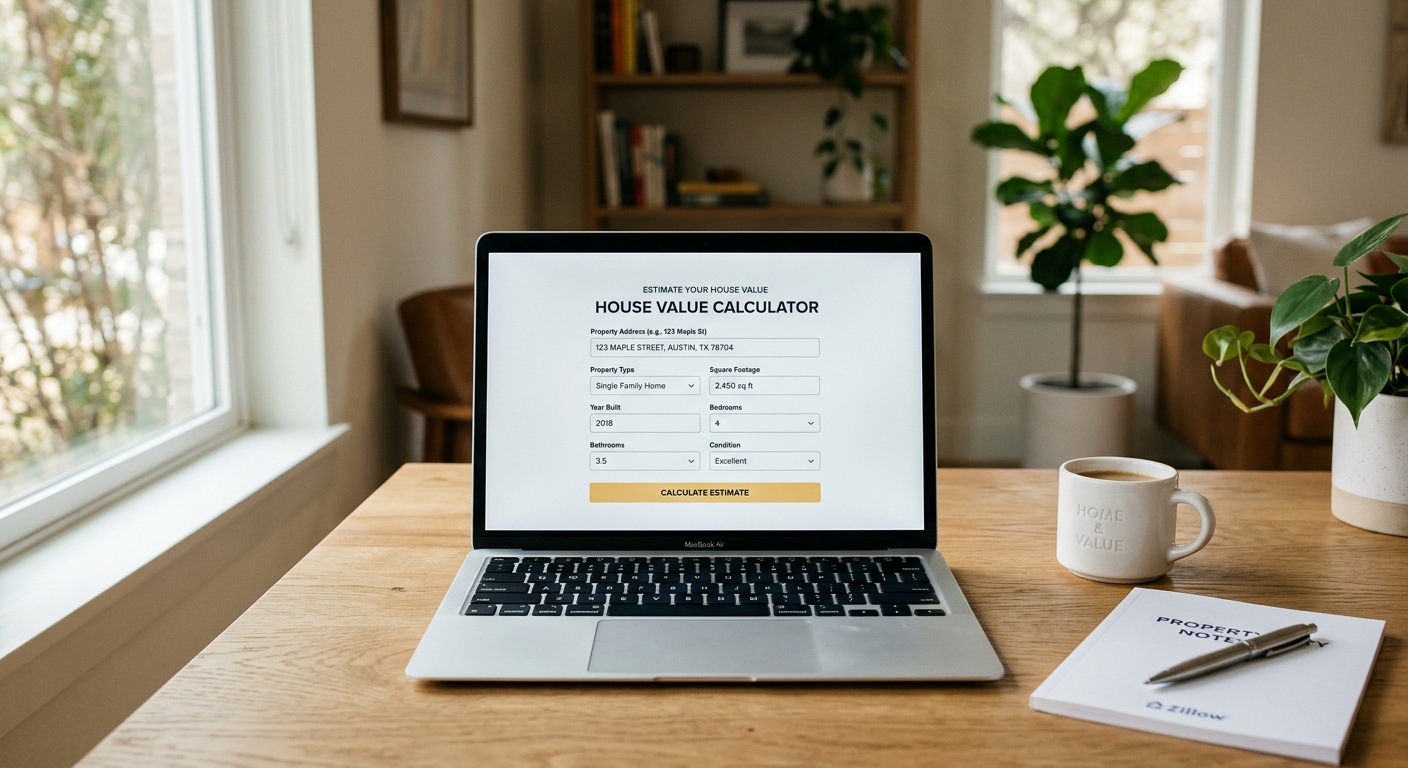
Quick scenario: imagine a homeowner in Denver typing “what’s my house worth” into Google at 9 p.m. They land on your calculator, enter their address, and see a preliminary range. Behind the scenes, the tool has already pulled comparable sales, tax assessment data, and sometimes MLS history to generate that estimate. To unlock the “precise” figure, they enter their name and email. That’s the trade.
From there, most modern platforms automatically:
- Tag the lead by estimated equity and motivation level
- Trigger a drip email sequence with local market updates
- Alert the agent via CRM or text for high-value or high-urgency leads
- Retarget the visitor with ads across social platforms for 30-60 days
Pro Tip: The tool itself doesn’t sell homes — the follow-up system does. A calculator without a structured nurture sequence is just a novelty widget.
Choosing the Right Calculator: Build vs. Buy
Agents in 2026 generally choose between three approaches: a white-labeled third-party widget, a brokerage-provided tool, or a custom-built solution integrated with a CRM. Each has tradeoffs in cost, accuracy, and control over the lead data.
What to Prioritize When Comparing Vendors
Accuracy matters less than you’d think for lead generation purposes — sellers already know Zestimates are rough. What matters more is the follow-up ecosystem: automated texts, CMA-ready reports, and CRM syncing. Ask vendors directly how leads are tagged, how quickly you’re notified, and whether the tool integrates with your existing database instead of creating a siloed list.
Real Agent Examples That Prove the Model
Consider Maria Alvarez, a broker in Tampa managing a twelve-agent team. In early 2025, she embedded a home value calculator on Facebook ads targeting zip codes with rising equity. Within four months, she generated 340 leads at an average cost of $9.20 per lead — dramatically cheaper than her previous cost-per-lead of $34 through boosted listing posts. Eleven of those leads converted to signed listings within six months, generating roughly $187,000 in gross commission income.
Contrast that with James Okoye, a solo agent in Charlotte who installed a calculator but never built a follow-up sequence. He collected 210 leads over the same period but closed exactly one deal. The lesson is clear — the calculator generates raw interest, but conversion depends entirely on what happens in the days and weeks afterward.
A third example: a Phoenix team layered their calculator with a “13-point equity report” delivered via email 24 hours after signup, positioning the agent as an analyst rather than a salesperson. That single tweak increased their appointment-setting rate by 22% according to their internal CRM reporting from late 2025.
Common Challenges (and How to Solve Them)
Challenge 1: Inflated expectations from inaccurate estimates. Automated valuations can be off by 8-10% in markets with limited comparable sales. Solution: frame the online number as a “starting estimate” and always offer a free, in-person or video CMA for precision.
Challenge 2: Low-quality or curiosity-only leads. Solution: add a light qualifying question during opt-in, such as “When are you thinking of selling?” This single field helps you triage leads without adding friction that kills conversion.
Challenge 3: Slow or inconsistent follow-up. Speed-to-lead studies from Inside Sales Experts Group show contacting a lead within five minutes increases conversion odds by up to 21 times compared to waiting 30 minutes. Solution: automate the first text and email, then personally call within the hour.
Calculator Tools Compared
| Tool Type | Avg. Monthly Cost (2026) | Lead Ownership | Setup Time | Best For |
|---|---|---|---|---|
| Third-Party Widget | $40-$120 | Agent (fully) | Under 1 day | Solo agents, quick launch |
| Brokerage-Provided | Included in fees | Shared with brokerage | Immediate | New agents, low budget |
| Custom CRM Integration | $150-$400 | Agent (fully) | 1-3 weeks | Teams, high lead volume |
| Portal-Based (Zillow/Realtor.com) | Pay-per-lead | Shared or none | Immediate | Supplemental exposure |
Conversion Data at a Glance
Below is a simplified comparison of average lead-to-appointment conversion rates across common seller lead sources, based on aggregated 2025-2026 brokerage reporting.
FAQs
Do home value calculators actually give accurate estimates?
Not always precisely — most automated tools rely on public tax records and recent comparable sales, which can miss renovations, unique lot features, or hyperlocal demand shifts. Accuracy typically ranges within 5-10% in active markets and can be wider in rural or low-inventory areas. That’s exactly why the calculator should function as a conversation starter rather than a final valuation.
How much does it cost to add a home value calculator to my website?
Costs vary widely. Simple third-party widgets can run as little as $40 per month, while fully integrated CRM-connected systems with automated follow-up sequences may cost $150-$400 per month. Many brokerages in 2026 also include a basic version at no extra charge as part of their agent technology stack.
What’s the biggest mistake agents make with these tools?
Treating the calculator as a set-it-and-forget-it gadget. The tool only generates the lead; conversion depends on fast, personalized follow-up, ongoing market updates, and eventually offering a professional CMA. Without that infrastructure, even hundreds of leads will produce minimal closed deals.
Your Next 30 Days: A Practical Roadmap
Ready to turn curiosity clicks into signed listings? Here’s your action plan:
- Week 1: Choose a calculator tool that integrates directly with your CRM — avoid siloed lead lists.
- Week 2: Build a five-email nurture sequence focused on local market insight, not sales pitches.
- Week 3: Launch a small, geo-targeted ad campaign (start with $10-$15/day) driving traffic to your calculator landing page.
- Week 4: Set a rule: every lead gets contacted within five minutes during business hours, and within one hour after.
The agents thriving in 2026 aren’t the ones with the flashiest technology — they’re the ones who pair a simple tool with disciplined, human follow-up. A home value calculator won’t replace relationship-building; it just gives you a far better reason to start the conversation. So, what’s stopping you from turning your website’s quietest visitors into your next listing appointment?